
The Better Brain Experience: Stronger Longer
An innovative program using movement and thought to increase the cognitive abilities of the brain. Easily done at all levels of cognitive ability to increase balance, spatial relations, awareness, and mood.
A Better Brain with Dr. Ken Podcast
A fast-moving podcast about life, living, thinking, feeling, and getting through. Dr. Ken Vehec—PhD in neuropsychology, Navy Veteran, Educator, Author, and stand-up comedian—speaks with Penny Goldstein on timely weekly subjects. Generally a 20-minute listen (unless you dive into our 1-hour radio shows), many episodes feature supportive articles right here in our archive.

Read Dr. Ken’s Article on Long Covid:
The following is a summation of an article submitted for peer review by Drs. Ken Vehec, Alan Smolowe, Mustapha Mouloua, and Ms. Penny Goldstein.
Long Covid: Brain Fog and other Cognitive Effects, A Way to Quicker Recovery
Long COVID exists. It has been well documented that COVID-19 attacks the brain in several ways, including through inflammation. This causes damage to brain cells which then compromises blood flow to the brain. Inflammation also causes a weakening of the immune system. There is a consensus among researchers and it is acknowledged in the National Institutes of Health (NIH) that nearly 15% of COVID patients in recovery report experiencing the following symptomatology: headaches, fatigue, sleep disturbances and brain fog (Avindra Nath, 2023). Avindra Nath, Clinical Director and Senior Investigator at NIH, where he stated in his podcast: From Our Neurons to Yours, in May of 2023 (Avindra Nath, 2023) that his research indicates in some patients effects of brain fog are so invasive that it may be impossible for these people to be able to return to work. This may also be related to the reduced functioning of our neurotransmitters. Neurotransmitters play a significant role in improving and balancing brain signals and maintaining a functioning brain. Neurotransmitters function to promote automatic responses like breathing and keeping the heart beating. In addition, they also provide psychological functions relating to mood regulation, pleasure, and learning (Felton, 2022). Research also indicates the following symptomatology: poor concentration, feeling confused, thinking more slowly than usual, fuzzy thoughts, forgetfulness, word loss, mental fatigue, attention disorder, spatial awareness, eye hand coordination, concentration, short term memory issues, anxiety and depression. Readers should not consider this a complete list as research is ongoing. Should one experience prolonged symptoms not indicated above they should be reported to a medical authority, a licensed mental health counselor or directly to the NIH.
This article is being written to provide insight on a number of the cognitive impairment symptoms listed above. The alleviation and potential resolution of those symptoms through noninvasive means. This article will discuss the benefits of brain exercises combined with minimal physical exertion. It has been stated that these symptoms are being experienced all along the COVID spectrum. Researchers are seeing brain problems in previously healthy individuals who have had mild infections. Dr. Ziyad Al-Aly, MD, a clinical epidemiologist at Washington University states “It doesn’t matter if you are young or old, female or male or what your race is, it doesn’t matter if you smoked or not or if you had other unhealthy habits or conditions” (Ziyad Al-Aly, 2024). Therefore, his research suggests that anyone becoming infected with COVID in any degree of severity, can potentially become a Long COVID sufferer. This leads us to the necessity of finding methods which have been proven over time to reduce symptomatology and increase the probability of recovery and an increased quality of life. First let’s identify and describe the conditions:
Brain Fog: is defined as a cognitive impairment syndrome characterized by impaired attention, memory, speed of processing and multitasking. Although these symptoms can be seen in subjects that are sleep deprived, not feeling well, or physically exhausted. In many cases, brain fog is temporary and gets better on its own (Mayo Clinic, 2022). Admittedly, why brain fog happens after COVID-19, or how long these symptoms are likely to last continues to be elusive. We do know that this form of brain fog can affect the different aspects of cognition identified above. In order to better understand these conditions cognition is further defined: Cognition refers to processes in the brain that are used to think, read, learn, remember, reason, and pay attention. Cognition is identified by the following three areas:
Attention: The Brain’s active processing of information that is happening while simultaneously ignoring other details. Attention is like a spotlight on a stage during a show that allows performers to stand out from the background.
Memory: The ability to learn, store, retain, and later retrieve information.
Executive Function: The ability to employ complex skills such as planning, focusing attention, remembering instructions, and juggling multiple tasks at one time.
Cognitive Impairment: A reduction in the ability to perform one or more thinking skills, when a person has trouble remembering, learning new things, concentrating, or making decisions that affect their everyday life. Cognitive impairment ranges from mild to severe. With mild impairment, people may begin to notice changes in cognitive functions, but still be able to do their everyday activities. Severe levels of impairment can lead to losing the ability to understand the meaning or importance of something and the ability to talk or write, resulting in the inability to live independently. Common signs are: frequently asking the same question or repeating the same story over and over. Not recognizing familiar people and places, having trouble exercising judgment, such as knowing what to do in an emergency, changes in mood or behavior, difficulty planning and carrying out tasks. Such as following a recipe or keeping track of monthly bills. One of the difficulties with cognitive impairment is that people can experience the identified symptoms and many times may not notice or be aware of their deficiencies. This article stresses the importance of family, friends and co-worker understanding the symptoms, noticing the differences in the way a previously infected person has changed or is acting since “recovering” from COVID. One can discuss their observations with the individual, recommend they discuss this with their provider, seek counseling, and most importantly support them in their continued recovery. According to the Mayo Clinic, Long COVID Brain Fog can manifest itself as:
Poor concentration: The inability to maintain focus on a task for an extended period of time. The mind wanders away from the subject matter at hand. The person cannot logically follow a conversation or displays an inability to pay attention. Their thought process may appear scattered or tangential.
Feeling confused: The inability to think as clearly or quickly as one normally would. You may feel disoriented and have difficulty paying attention, remembering, and making decisions.
There are 3 types of confusion:
Hypoactive: Low activity. Acting sleepy or withdrawn and "out of it."
Hyperactive: High activity. Acting upset, nervous, and agitated.
Mixed: A combination of hypoactive and hyperactive confusion. A person with disorientation might also experience: confusion, delirium, delusions, agitation, hallucinations and/or an inclination to wander.
Other ways Brain Fog may manifest may include: Thinking more slowly than usual, fuzzy thoughts or an inability to concentrate on a task, forgetfulness, lack of concentration, short term memory issues, lost words or having to use smaller words and reoccurring mental fatigue. These symptoms can come and go giving on an experience of good days and bad days. This is by no means a complete list of Brain Fog symptoms. Other areas that researchers at Oxford University have stated in their study Rapid vigilance and episodic memory decrements in Covid-19 survivors that “our Covid-19 did not feel any more symptomatic at the time of testing, they showed degraded attention and memory. Our findings reveal that people can experience some cognitive consequences for months” (Sijia Zhao, 2022).
Spatial awareness: Proprioception one’s awareness of where they are in space and time. This can cause disorientation and a feeling of being lost. It can also greatly affect an individual’s balance. It is also important in understanding the concept of time, drawing, ordering food from a menu, changing points of view and handwriting. These are all skills that we need to use every day and for someone who finds them difficult, if they have a good basic intelligence, it can be very frustrating, and lead to social misunderstandings.
Eye Hand Coordination: This denotes the coordination of the eyes and hands working together to perform a task. The ability to reach out and grasp an object, catch or throw a ball, use a remote control or video game controller, play an instrument using sheet music and type to name a few. Typically, with spatial awareness, eye and hand coordination difficulties there tends to be a number of things getting knocked over, spilt or bumped into.
Anxiety: It is true, all humans experience anxiety. It is the way we are wired. Fight or Flight is the common example. Whether one chooses to fight or flight, one’s body and mind react naturally. Why then is anxiety such a major concern with people suffering with Long Covid? Here are some of the more commonly stated concerns of while people are currently experiencing it. Some express their fears about the current status of their health and length of recovery thinking that they may never be as good as they were prior to Long Covid. Others are concerned over their inability to work and if they have the financial wherewithal to survive surviving Long Covid. Still others project outwards concerns for their families and friends, especially the elderly in their lives. Symptoms of anxiety are; trouble sleeping, difficulty concentrating, difficulty remembering things, changes in mood, flashbacks, shallow rapid breathing, difficulty slowing breathing down, chest pain and racing thoughts.
Depression: As with anxiety, Long Covid and depression can affect anyone. But some groups may be at higher risk than others. These are similar to the higher at risk populations for Covid as identified by the CDC to include: Having asthma or a compromised breathing system, cancer, being elderly, chronic kidney disease, chronic liver condition, obesity, HIV Positive, diabetes and having Mental health conditions limited to mood disorders including depression and schizophrenia spectrum disorders.
Here are a few of the signs and symptoms of depression: Persistent sad, anxious, or “empty” mood, feelings of hopelessness or pessimism, feelings of irritability, frustration, or restlessness, feelings of guilt, worthlessness, or helplessness, loss of interest or pleasure in hobbies and activities, decreased energy, fatigue, or feeling slowed down, difficulty concentrating, remembering, or making decisions, difficulty sleeping, waking early in the morning, or oversleeping, changes in appetite or unplanned weight changes, physical aches or pains, headaches, cramps, or digestive problems that do not have a clear physical cause and do not go away with treatment and thoughts of death or suicide or suicide attempts. Should someone exhibit any of these signs or symptoms especially if suffering from Long Covid, they should seek medical attention or speak to a mental health provider, family member, friend or religious counselor. If necessary, dial 988 to reach the Suicide Hotline to speak with someone immediately (after connecting, veterans press 1 to speak with a veteran’s counselor).
Below is an exercise from the Brain Boost© program
THE EYES HAVE IT
This Is an activity which involves a series of eye movements and neck stretches to enhance visual tracking and coordination. It's particularly beneficial for promoting flexibility in eye muscles and improving focus. Here's a step-by-step guide on how to perform the exercise:
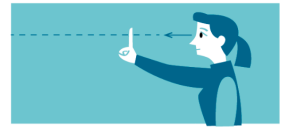
Instructions: Sit or stand in a comfortable position with your back straight and shoulders relaxed. Take a Deep Breath. Inhale deeply through the nose to relax and prepare for the exercise. Allow your shoulders to drop while breathing in. Begin by looking straight ahead with the head in a neutral position. One may find it helpful to hold your arm straight out from the nose at eye level then follow your finger with your eyes as you move your finger as directed below.
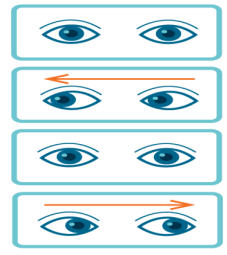
Move Your Eyes to the right: Slowly move both eyes to the right following your finger without turning your head. Focus on a point as far to the right as you can comfortably see. Hold your gaze in this rightward position for a few seconds, maintaining steady breathing.
Return to Center: Slowly bring both eyes and finger back to the center, focusing on a point straight ahead. Move your head from side to side (picture touching your ear to your shoulder). Do this stretch 3 times, slowly.
Move Your Eyes to the left: Repeat the process by moving your eyes to the left following your finger without turning your head. Focus on a point as far to the left as you can comfortably see. Hold your gaze in this leftward position for a few seconds, maintaining steady breathing.
Return to Center: Slowly bring your eyes back to the center, focusing on a point straight ahead. Move your head from side to side (picture touching your ear to your shoulder). Do this stretch 3 times, slowly.
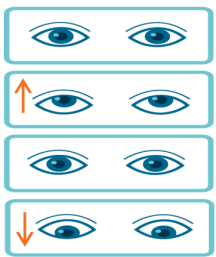
Move the eyes upward: Without tilting your head. Focus on a point above your eye level. Hold your gaze in this upward position for a few seconds.
Return to Center: Slowly bring your eyes back to the center, focusing on a point straight ahead. Move your head from side to side (picture touching your ear to your shoulder). Do this stretch 3 times, slowly.
Move your eyes downward: Without tilting your head. Focus on a point on the floor. Hold the gaze in this downward position for a few seconds.
Return to Center: Slowly bring the eyes back to the center, focusing on a point straight ahead. Move your head from side to side (picture touching your ear to your shoulder). Do this stretch 3 times, slowly.
Repeat the entire exercise with each sequence lasting for 30 seconds, moving your eyes to the right, left, up, and down, holding each position for a few seconds before returning to the center. Finish with a few deep breaths to relax. This entire exercise should take approximately 3 minutes to complete.
This simple singular exercise impacts and stimulates multiple areas of the brain. By crossing the midline of the body signals must travel from one side of the brain to the other and then back again as the exercise continues (CG, 2004). This wakes up both hemispheres of the brain and engages them in whatever activities you will be doing for the next 3-4 hours. Identified below are expected results of this exercise.
This Exercise Activates:
Visual cortex
Increases peripheral vision
Strengthens eye muscle coordination
Increases the eyes ability to focus and track moving objects
Stimulates the vestibular system
Stimulates Broca’s area in the brain for word/language recall
Increases balance by stimulating the brain’s recognition of sensory input
Improved Life Skills:
Walking
Talking
Reading Comprehension
Writing
Spelling
Listening
Benefits:
Visual Tracking: Improves eye movement coordination and tracking skills.
Focus and Concentration: Enhances attention and concentration.
Brain Integration: Engages both hemispheres of the brain for improved cognitive function.
Increases Balance: Enhanced due to the brain acknowledging increased sensory input from the bottom of the feet.
Stress Reduction: The rhythmic movement can have a calming effect on the nervous system. Incorporate Infinity Loop into your daily routine, especially during breaks or moments of mental fatigue, to promote cognitive wellness and overall brain health.
Here are some tips that help increase the effectiveness of the exercise:
Smooth Movements: Ensure that your eye movements are smooth and controlled, avoiding jerky motions.
Maintain a Relaxed Posture: Keep your neck and shoulders relaxed throughout the exercise.
Increase Range Gradually: If you feel comfortable, gradually increase the range of your eye movements.
Regular practice: Can contribute to improved visual tracking and concentration, making it a valuable brain exercise.
Add Music: Consider adding stimulating music while performing the exercise. Increasing the emotional weight of what brain is experiencing, increases the potential for retention. The Eyes Focus Exercise is a gentle and effective way to promote eye flexibility and coordination.
All of the above information has been offered to illuminate what people suffering from Long COVID may be experiencing. The good news is that there is bountiful research which indicates that Long COVID does end, and there are a number of treatments which are working. One of the most touted is exercise. Not the standard “go to the gym and workout” type of exercise. But the kind one can do sitting, standing or even while lying down. There are numerous body and brain exercise programs such as Brain Boost Exercises© which physiologically and mentally stimulate the brain in such a way that the entire brain itself has to wake up, participate and engage. The brain will begin using both hemispheres and stay energized in a hyper-aroused sensory input state for hours as one moves through common daily activities.
Research and application encourages the re-application of at least three exercises of your choice, 2-3x daily depending on the activity(s) one will be performing each day. Each series of exercises should be performed for 2-3 minutes. These exercises have been proven to work in numerous settings including nursing homes and schools for children with learning disabilities. They have been found to assist learning, recalling information, sensory input and physical balance. This is new and exciting news for sufferers of Long Covid. For questions and comments, Dr. Vehec can be reached at betterbraininitiatives.@gmail.com.
References
Avindra Nath, M. (2023). From Our Neurons to Yours. Bethesda, Maryland, USA. CG, W. (2004, June 4). https://pubmed.ncbi.nlm.nih.gov/15178787/. Retrieved from Crossing the midline.
Cleveland Clinic. (2022, March 14). CLeveland Clinic . Retrieved from What Are Neurotransmitters: https://my.clevelandclinic.org/health/articles/22513-neurotransmitters
Felton, A. (2022, September 01). WebMD. Retrieved from Neurotransmitters: What To Know: https://www.webmd.com/brain/neurotransmitters-what-to-know
Majorovas, V. (2023, December 09). Healthnews. Retrieved from How to Activate the Parasympathetic Nervous System: https://healthnews.com/family-health/healthy-living/how-to-activate-theparasympathetic-nervous-system/
Mayo Clinic. (2022, March 29). Dealing with Brain Fog from Long Covid. Retrieved from mayoclinichealthsystem.org/featured topic/brain-fog-from-long covid-19.
Sijia Zhao, K. S. (2022). Rapid vigilance and episodic memory decrements in COVID-19 survivors . Brain Communications, fcab295.
Ziyad Al-Aly, M. (2024, January 18). Addressing Long COVID: Advancing Research and Improving Patient Care. (E. L. Senate Committee on Health, Interviewer)
A Better Brain: Stronger Longer
⦁
A Better Brain: Stronger Longer
A Better Brain: Stronger Longer ⦁ A Better Brain: Stronger Longer


We founded the Better Brain Experience out of a pure passion for people. Designed by Dr. Ken Vehec and Dr. Alan Smolowe, our program aims to ensure that our brains are kept healthy and at optimal function for as long as possible.
-
An innovative program using movement and thought to increase the cognitive abilities of the brain. Increases balance, spatial relations, awareness and mood. Easily done at all levels of cognitive ability.ription
-
Better Brain Associates, Inc. – Our seasoned professionals can design and implement a specialized, fun, and effective program to improve brain health for you, your company, or your organization.
-
Our non-profit corporation designed to bring the Better Brain Experience to those who need it most, working directly with PTSD, eldercare communities, special needs children, and other high-risk groups.
-
A fast-moving podcast about life, living, thinking, feeling, and getting through. Dr. Ken Vehec—PhD in neuropsychology, Navy Veteran, Educator, Author, and stand-up comedian—speaks with Penny Goldstein on timely weekly subjects. Generally a 20-minute listen (unless you dive into our 1-hour radio shows), all episodes feature supportive articles right here in our archive.